
Our service
Venetian and Vertical Blinds
Venetian and vertical blinds for offices, hospitals, schools and showrooms, measured, supplied and fitted.
- Offices and meeting rooms
- Hospital rooms and consulting rooms
- Classrooms and libraries
- Showrooms and reception areas
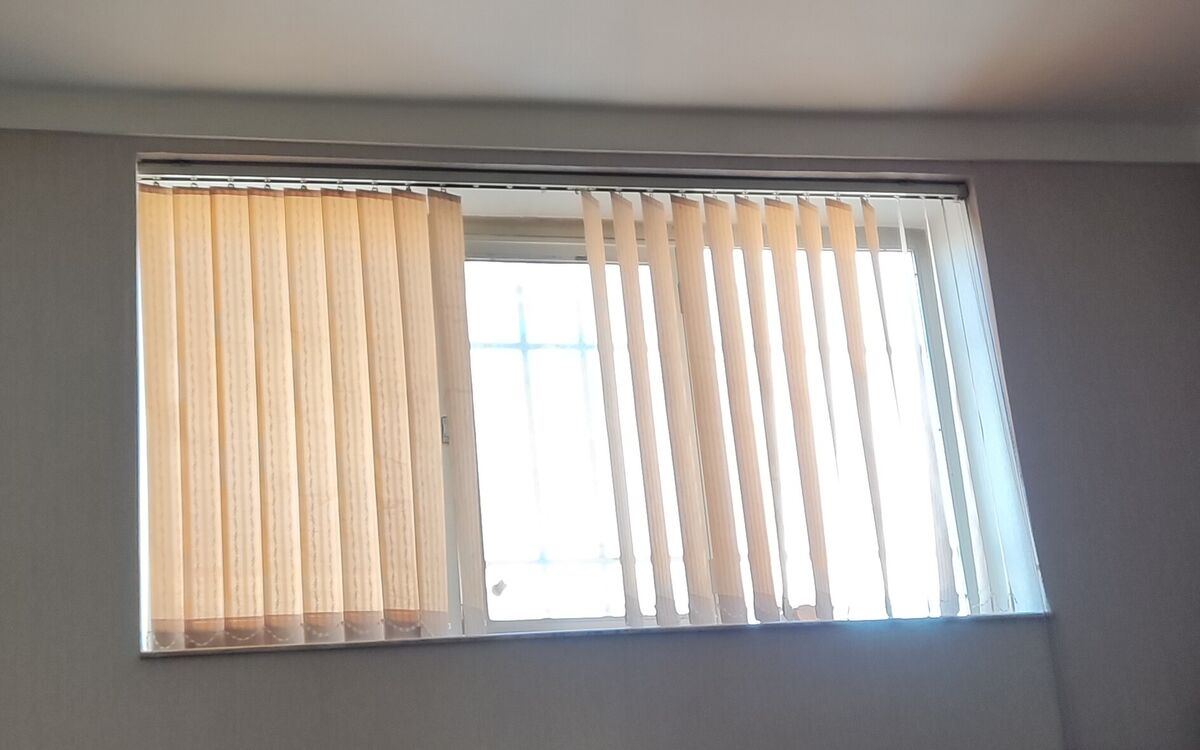
Blinds control light, glare, heat and privacy. We supply and fit venetian and vertical blinds across offices, hospitals, schools, showrooms and other commercial and institutional buildings.
Types of blind
| Type | How it works | Good for | Considerations |
|---|---|---|---|
| Venetian blinds | Horizontal slats in aluminium, wood-look or PVC; tilt to control light and raise or lower | Offices, meeting rooms, clinics, classrooms | Slats collect dust; choose slat width for the view you want |
| Vertical blinds | Vanes in fabric, PVC or aluminium hung from a top track; tilt and slide | Wide windows, glass doors, large offices, showrooms | Longer drops need strong track and weights |
| Glazed-partition blinds | Slim blinds fitted between glass or inside frames | Meeting rooms and cabins | Planned together with the partition, see aluminium fabrication |
Choosing the blind
Light and privacy. Decide whether the room needs full blackout, filtered light or only glare control. Meeting rooms and clinics often need privacy while keeping daylight.
Material and cleaning. In healthcare, schools and food areas, pick materials that can be wiped. In offices, colour and appearance often matter as much.
Operation. Cord, chain, wand and motorised controls differ in safety and convenience. In places used by children or patients, choose controls that keep loose cords out of reach.
Colour. Light colours reflect heat and brighten rooms. Darker colours reduce glare more but can make a room feel closed in. We show samples against the actual window.
Fit. Inside-recess or outside-recess fitting changes how much light leaks around the edges.
How the work runs
- Measurement on site, window by window, noting the recess depth, obstructions and fixing surface.
- Selection of type, colour, material and operation, with samples.
- Ordering and fabrication, with sizes checked against the measurements.
- Fitting, with brackets fixed into sound material and the blind levelled and tested.
- Handover, with operating instructions and care advice.
Quality checks
- Blinds sit square and level, with even gaps and no light leaks beyond what was agreed.
- Slats and vanes tilt smoothly and fully.
- Cords and chains operate freely and are anchored safely.
- Brackets are firmly fixed.
- Finish is clean and undamaged.
Common problems and how to avoid them
| Problem | Usual cause | How we avoid it |
|---|---|---|
| Blind too short or too narrow | Measured badly | Measure each window and record the fitting position |
| Vanes bunching or twisting | Poor track or weights | Quality track, weights matched to the drop |
| Slats bent or broken | Rough handling, wrong width for the span | Choose slat width for the window and give operating advice |
| Faded fabric | Strong sun and wrong material | Fabric chosen for exposure |
| Loose brackets | Weak fixing surface | Use proper fixings and a sound surface |
Care and maintenance
Dust blinds regularly with a soft cloth or a vacuum brush. Wipe slats and vanes with a damp cloth and a mild cleaner, and let them dry. Do not pull on cords sideways. Report damaged slats early because broken pieces damage neighbours. We can inspect blinds as part of a maintenance contract.
What affects cost and time
The type of blind, the material, the number and size of windows, the operation and the fitting height affect cost. Lead time depends on whether the blinds are made to measure. We state both in the proposal.
Need blinds for an office, ward or classroom? Talk to us about your windows.
Guides
Read more about blinds
glazing · 5 min read
Choosing Glass for Office Glazing: Toughened, Laminated or Double-glazed?
A plain-language guide to glass types for partitions, windows and facades: what each does, where it is used and the questions to ask before you order.
Read the guide →quotations · 4 min read
How to Read a Fit-out Quotation
What to compare when two or three contractors send proposals for a fit-out, and the warning signs in a quotation that looks too good.
Read the guide →flooring · 5 min read
Flooring for Hospitals and Clinics: Choosing a Hygienic Floor
What makes a floor suitable for healthcare buildings: seamless sheet, coving, slip resistance, base preparation and cleaning, with a comparison of vinyl options.
Read the guide →Questions
Blinds: common questions
Do you measure at the site?
Should the blind fit inside or outside the window recess?
Can you repair or replace existing blinds?
What is the difference between venetian and vertical blinds?
Which material is best for a hospital or school?
Will blinds reduce heat?
More services
Related work
Aluminium fabrication
Aluminium partitions, windows, doors and frames, cut and finished in our own workshop and installed on site.
ACP cladding
Aluminium composite panel cladding and facade work that gives industrial and commercial buildings a clean, durable exterior.
Glazing
Glass facades, glazed windows and doors in aluminium frames, supplied, fitted and sealed with care for safety and weatherproofing.
False ceilings
Gypsum board, POP and aluminium false ceilings for offices, hospitals, schools, showrooms and hotels.
Planning a project? Let us talk it through.
Tell us what you have in mind. We will call you, visit the site and put the scope, schedule and cost in writing.